
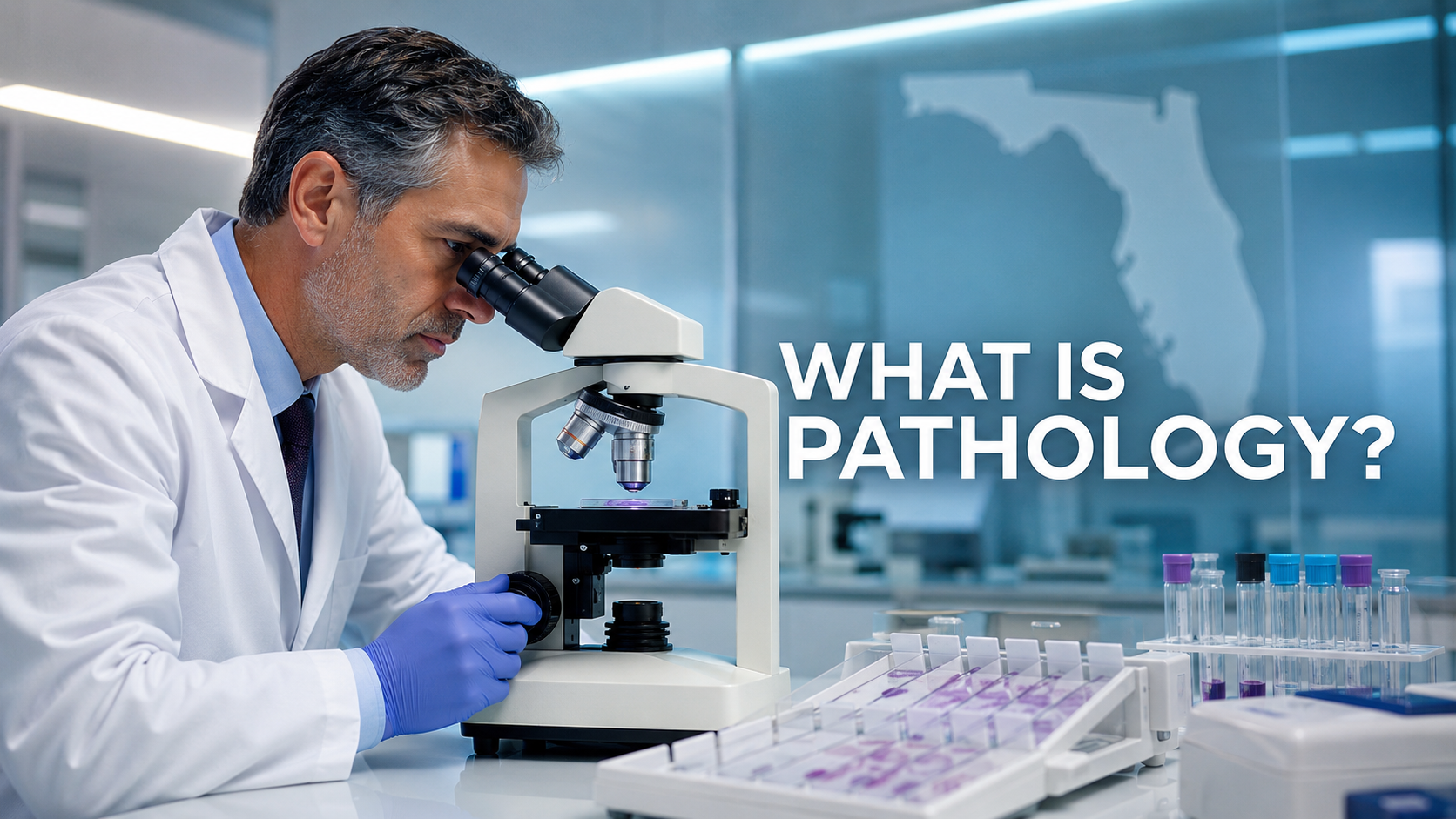
What Is Pathology? Understanding the Science Behind a Diagnosis
When a physician needs to know what is happening inside the human body, pathology often provides the answer.
Pathology is the medical specialty focused on the study and diagnosis of disease. Pathologists examine tissues, cells, blood, body fluids, and other clinical specimens to identify disease and provide information that helps physicians make informed decisions about patient care.
Simply put: pathology helps turn a medical question into a diagnosis.
Laboratory testing plays an important role in detecting medical conditions, determining diagnoses, planning treatment, and monitoring disease. MedlinePlus explains that laboratory testing can examine blood, urine, body fluids, and tissue to provide important information about a patient’s health.
For physicians, hospitals, clinics, and surgery centers throughout Central Florida, having access to experienced pathology professionals is an essential part of delivering informed patient care.
What Does a Pathologist Do?
A pathologist is a physician specializing in the diagnosis and study of disease.
While patients may never meet the pathologist involved in their case, the pathologist can play a critical role behind the scenes.
For example, when a biopsy or surgical specimen is collected, a pathologist may examine the tissue microscopically and use additional laboratory studies when appropriate. The findings are then documented in a pathology report that helps the treating physician understand what was discovered and determine the appropriate next steps.
Pathologists may also communicate directly with the treating physician when a case is complex or additional interpretation is needed.
That physician-to-physician relationship is an important part of the diagnostic process.
What Are the Main Types of Pathology?
Pathology includes multiple specialties, each addressing different types of specimens and diagnostic questions.
Anatomic and Clinical Pathology
Anatomic and clinical pathology involves the evaluation of tissues, cells, and clinical specimens.
Services can include surgical pathology, histology, cytology, special stains, immunohistochemistry, clinical pathology consultation, and other appropriate ancillary testing.
Dermatopathology
Dermatopathology concentrates on diseases affecting the skin.
Skin biopsies may be evaluated for inflammatory, infectious, melanocytic, and other neoplastic conditions. Microscopic findings can then be correlated with the clinical information supplied by the treating provider.
Cytopathology
Cytopathology focuses on individual cells or small groups of cells rather than larger tissue specimens.
Specimens can include Pap tests, fine-needle aspirations, urine, respiratory samples, body fluids, brushings, and washings.
Molecular Pathology and Microbiology
Modern pathology extends beyond what can be seen through a microscope.
Molecular pathology and microbiology can provide additional information for complex diagnostic questions. Depending on the case, testing may include molecular oncology, infectious disease testing, in situ hybridization, PCR, and other validated assays.
Other important specialties offered by Pathology Specialists include gastrointestinal and liver pathology, hematopathology, and second-opinion consultations. Pathology Specialists provides these diagnostic services through its team of board-certified pathologists.
What Happens to a Biopsy After It Is Collected?
For many patients, a biopsy seems to disappear into a laboratory and eventually return as a report. Behind that report is a carefully controlled diagnostic process.
Depending on the specimen and clinical question, that process may involve:
- Collection of the tissue or cellular specimen.
- Proper identification, preservation, and transportation.
- Laboratory processing of the specimen.
- Microscopic examination by a pathologist.
- Additional stains or ancillary testing when appropriate.
- Interpretation in the context of the available clinical information.
- Preparation and delivery of the pathology report.
- Consultation with the referring physician when necessary.
Each step matters because the ultimate goal is straightforward: provide physicians with clear, clinically useful diagnostic information.
Why Does Choosing the Right Pathology Partner Matter?
Pathology is not simply about running a laboratory test. It is about interpretation, experience, clinical context, communication, and access to appropriate expertise.
This is particularly important when findings are unusual, results require clarification, or a physician needs to speak directly with the pathologist responsible for reviewing the case.
That is where a local pathology partner can make a meaningful difference.
Frequently asked questions about pathology
What is pathology in medicine?
Pathology is the medical specialty that studies disease by examining tissues, cells, blood and other clinical specimens. Its findings help clinicians establish diagnoses and interpret disease-related changes.
Who interprets a biopsy?
A pathologist, a physician trained in laboratory medicine and disease diagnosis, examines biopsy tissue. The treating clinician interprets the pathology report in the context of the patient’s history, examination and other tests.
Pathology Services for Florida Healthcare Providers
Based in Orlando, Pathology Specialists provides diagnostic pathology services to physicians, hospitals, clinics, specialty practices, and surgery centers throughout Central Florida.
The practice combines board-certified pathologists and subspecialty expertise with direct physician consultation, secure reporting, specimen logistics, and support for practice workflows. Pathology Specialists states that its team has served Central Florida healthcare providers for approximately 80 years.
Instead of functioning simply as another distant laboratory, the focus is on becoming a responsive diagnostic partner to the healthcare professionals responsible for the patient.
Accurate pathology matters because every specimen represents a patient waiting for an answer.
For Florida healthcare organizations looking for experienced pathology services, responsive communication, and direct access to pathologists, Pathology Specialists provides local expertise backed by decades of service in Central Florida.
Need a Pathology Partner in Florida?
Whether your organization is a physician practice, hospital, clinic, specialty office, or surgery center, Pathology Specialists can help with diagnostic pathology services, specimen logistics, reporting workflows, and direct case consultation.
Get the answers your practice needs from experienced Florida pathology professionals.
Contact Pathology Specialists to learn more about pathology services in Orlando and Central Florida.